
TL;DR
- A garage door off track means a roller has left the rail, the door is crooked, and it’s now unsafe to operate. Stop using it.
- Don’t run the opener. Forcing a derailed door turns a $200 roller job into a bent-panel replacement fast.
- Secure the door so it can’t drop. Lock vise grips on the track below a roller, or prop it if it’s partway up.
- Most off-track repairs in San Diego run $180 to $450. Coastal corrosion on cables and rollers is the top cause we see in beach areas.
A garage door comes off track when one or both rollers leave the rail, leaving the door crooked, stuck, and unsafe to run. Stop using it right now. Don’t hit the opener again. Disconnect the opener with the red release cord, secure the door so it can’t fall, and call a pro. Forcing a derailed door is the single fastest way to bend a panel and triple your repair bill.
Here in San Diego, we see off-track doors derail for one reason more than any other: coastal salt air. Rollers and cables that would last 15 years in Phoenix rust out in 6 near the water. Below is what causes it, what to do in the next five minutes, what it costs, and the local stuff the national blogs leave out.
What “off track” actually means
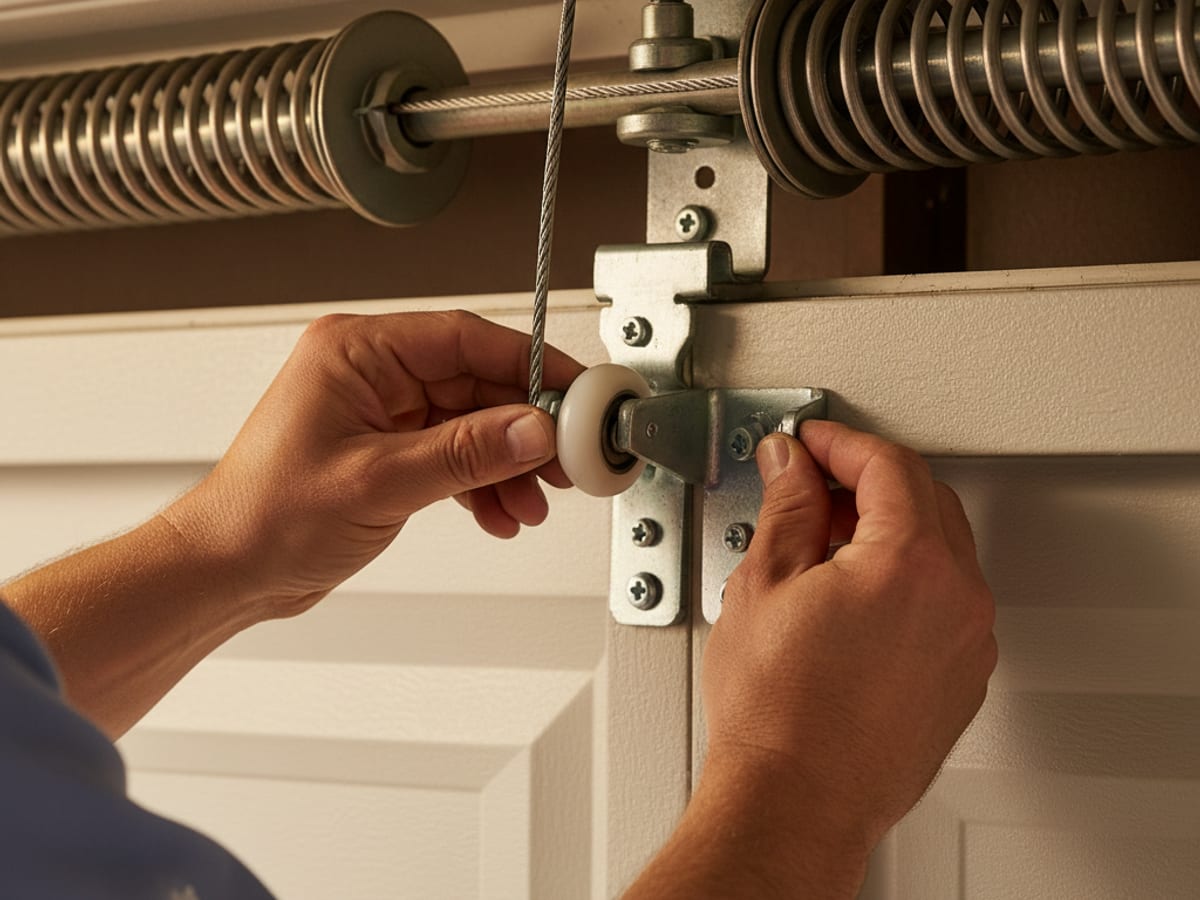
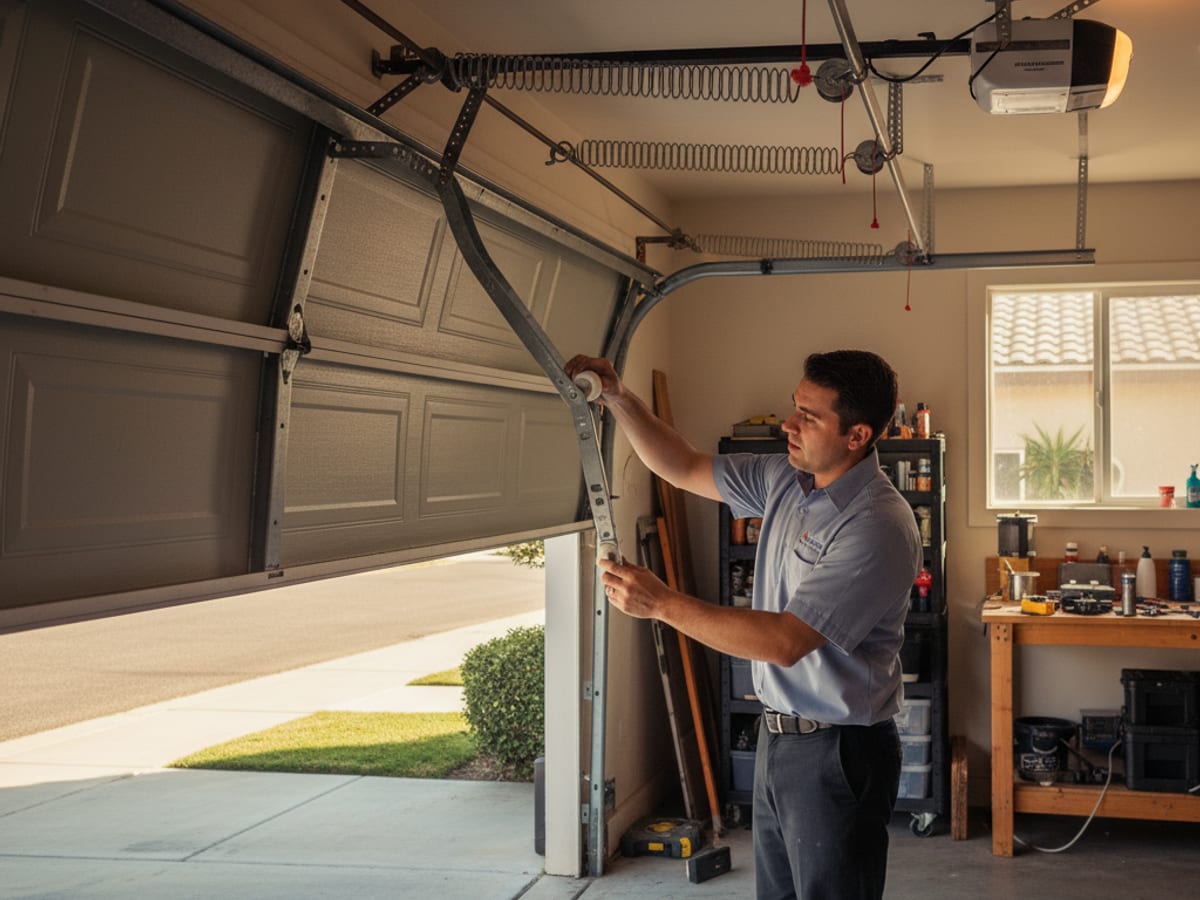
Your door rides on nylon or steel rollers that sit inside two vertical tracks bolted to the wall. When a roller pops out of its track, the door loses its guide on that side. It tilts, jams, and the weight that the springs used to balance now hangs crooked on the cables and the opener.
Signs you’re off track and not just stuck:
- The door is visibly crooked, higher on one side than the other.
- A gap shows between a roller and the track, or a roller is dangling loose.
- The door catches hard at the same spot every time, or won’t move at all.
- A cable is hanging slack off its drum at the top corner.
If the door still looks square and just won’t close, that’s a different problem. Start with our won’t-close troubleshooting guide instead. This post is for doors that have actually left the rail.
Do this in the next five minutes
A two-car door weighs 150 to 250 pounds. A derailed one is unbalanced on top of that. Treat it like it wants to fall, because it does.
- Stop pressing the opener. Every cycle drags the door further out of the rail and can fold a panel.
- Pull the red emergency release cord on the opener rail. This disconnects the door from the motor so it can’t try to move it.
- Don’t try to move the door yourself. If it’s partway up and you push it, it can drop.
- Secure it. Clamp a pair of vise grips on the track just under a still-seated roller so the door can’t slide down. If it’s already on the ground and crooked, leave it.
- Keep kids, pets, and cars clear until a tech has it back on the rail.
That’s it. Realigning a door is a two-person job with the right clamps and a feel for spring tension. The DIY tutorials make it look simple. They skip the part where a loaded cable or a half-seated spring can hurt you.
Why San Diego doors come off track
The national guides list the same five causes: impact, worn rollers, debris, bad alignment, broken cables. All true. But they’re written for the whole country. Here’s what actually puts coastal San Diego doors on the ground.
Salt-air corrosion (the big one near the water)
If you live in Coronado, Pacific Beach, La Jolla, Ocean Beach, Imperial Beach, or anywhere within a couple miles of the water, salt is eating your hardware. Marine air carries chloride that pits and rusts steel. The parts that fail first:
- Lift cables. Galvanized cables fray strand by strand from the inside. A frayed cable snaps, the door drops on that corner, and the rollers jump the track.
- Steel rollers and stems. Cheap rollers seize and rust. A frozen roller skids instead of rolling, then climbs out of the rail.
- Track bolts and brackets. Rusted track bolts loosen. A loose track shifts under load and the door walks off it.
This is why beach-area doors derail years sooner than inland ones. If you’re near the coast, the fix isn’t just reseating the door. It’s swapping the corroded cable and rollers so it doesn’t happen again next winter. We carry coated, corrosion-resistant rollers and stainless-friendly hardware for exactly this. See cable and roller replacement.
Marine-layer rust inland too
You don’t have to be on the sand. The marine layer rolls into Clairemont, Linda Vista, Chula Vista, and the inland valleys most mornings, half of June included. That daily damp-then-dry cycle rusts bare steel slower than oceanfront, but it still gets there. Rollers that never got lubed are the usual victims. The fix is cheap if you catch it early. Our maintenance checklist covers the lube schedule that prevents it.
A car backed into it
The other top cause has nothing to do with weather. Someone backs out before the door is all the way up, or bumps it pulling in. A vehicle hit bends the track, and a bent track is a guaranteed derail. This one needs a track section replaced, not just realigned.
A broken spring let it fall
When a torsion spring breaks, the door loses its counterbalance and can come down hard enough to throw a roller. If you heard a loud bang like a gunshot from the garage, that was likely the spring. Read what to do when a spring breaks before you touch anything. A broken spring plus an off-track door is an emergency, not a weekend project.
What off-track repair costs in San Diego
Most off-track calls aren’t expensive, as long as you didn’t keep running the opener and fold a panel. Here’s what we actually charge across the county. These are real ranges, not lowball teaser numbers.
| Repair | Typical San Diego cost | Notes |
|---|---|---|
| Reseat door, realign rollers | $180 – $280 | Door left the rail but parts are fine |
| Roller replacement (full set) | $200 – $350 | Standard for seized or rusted rollers |
| Lift cable replacement (pair) | $200 – $320 | Common on coastal homes |
| Bent track section replacement | $250 – $450 | After a vehicle hit |
| Off-track + broken spring | $400 – $650 | Emergency, both fixed together |
| Folded/cracked panel | $350 – $1,200+ | What happens if you force a derailed door |
Emergency and after-hours service runs higher than a scheduled daytime visit. We quote the price before any work starts, so there’s no surprise on the invoice. For the full pricing picture across every common repair, see our San Diego repair cost guide.
The line that matters most in that table is the last one. A reseat is $200. A panel you folded by forcing it is four to six times that. That’s the whole reason we say stop using the door.
DIY or call a pro
Honest answer: this is one of the few garage door jobs we tell people not to DIY.
You can safely clear debris from a track, wipe and lube a roller, and tighten a loose track bolt before the door has actually derailed. Those are prevention. Once a roller is out of the rail and the door is crooked, the door is under uneven load and the cables and springs are involved. That’s where people get hurt.
Call a pro if:
- The door is crooked or a panel is bent.
- A cable is loose, frayed, or off its drum.
- A spring is broken (visible gap in the coil).
- The track is bent from an impact.
- You’re near the coast and the hardware is visibly rusted.
For a derailed door, garage door repair is same-day across the county. If a spring’s involved, it’s an emergency repair and shouldn’t wait.
HOA and permit reality for San Diego homeowners
Two local questions come up on off-track jobs, so here’s the straight answer.
Permits. Reseating a door, replacing rollers, cables, springs, or a track section is a repair. It does not need a permit anywhere in San Diego County. A permit only enters the picture if you’re replacing the whole door and altering the structural opening, and even then it’s the installer’s job to pull it, not yours. So an off-track repair is never a permit situation. Don’t let anyone tell you it is.
HOA rules. A repair that keeps your existing door looking the same needs no HOA approval. Where it matters: if the damage is bad enough that you’re replacing panels or the whole door, many San Diego HOAs (especially in Carmel Valley, 4S Ranch, Santaluz, and the newer master-planned communities) restrict color and panel style. Match the existing door, or get the spec approved before a new one goes up. For a like-for-like repair, you’re fine.
How to keep it on the track
Off-track doors are mostly preventable, and prevention is cheap compared to the repair.
- Lube the rollers, hinges, and springs twice a year with a garage-door-specific lubricant. Near the coast, make it three times. Skip WD-40, it’s a solvent, not a lubricant.
- Replace rusted rollers before they seize. A $200 roller set beats a $400 derail call.
- Swap coastal cables on a schedule. If you’re oceanfront and your cables are over five years old, inspect them now.
- Don’t back out early. The number one impact cause is leaving before the door is fully up.
- Listen for grinding or popping. A roller fighting the track tells you it’s about to leave it.
The full preventive routine, timed for San Diego’s seasons, is in the maintenance checklist.
Frequently asked questions
Is it safe to use a garage door that’s off track?
No. A derailed door is unbalanced and the cables and springs are carrying uneven load. Running the opener can drag it further off, fold a panel, or drop the door. Disconnect the opener, secure the door, and stop using it until it’s fixed.
How much does off-track repair cost in San Diego?
Most off-track repairs run $180 to $450, depending on whether it’s a simple reseat, a roller or cable swap, or a bent track section. If a spring broke too, expect $400 to $650. We quote the price before starting work.
Why does my garage door keep coming off track?
Repeat derails usually mean the underlying part is failing, not just the door. Near the San Diego coast, that’s almost always corroded rollers or a fraying cable from salt air. Reseating the door without replacing the rusted part just buys a few weeks.
Can I fix an off-track garage door myself?
We don’t recommend it. A derailed door is under uneven spring and cable tension, which is where DIY injuries happen. Clearing debris and lubing rollers before a door derails is safe. Reseating a door that’s already off is a two-person pro job.
Does coastal salt air really cause this?
Yes, and it’s the top cause we see in beach communities like Coronado, Pacific Beach, and La Jolla. Salt corrodes cables, rollers, and track bolts years faster than inland air. Coated, corrosion-resistant hardware lasts much longer near the water.
Do I need a permit to fix an off-track door in San Diego?
No. Reseating, roller, cable, spring, and track repairs are all repairs and need no permit anywhere in San Diego County. A permit only applies to a full door replacement that changes the opening, and that’s the installer’s responsibility.
If your door has left the track, don’t force it. Disconnect the opener, secure the door, and call Lift Pro SD at (858) 925-5546. Most off-track repairs are same-day and under $450 across San Diego County, including La Jolla, Coronado, Chula Vista, and the coast.