Cables and rollers. The loudest door in the neighborhood stops being yours.
Last updated September 6, 2026
Cables snap, usually when a spring fails and shock-loads them. Rollers wear, cheap steel bearings dry up, flat-spot, and then grind tracks until metal shavings are in your driveway. Both are low-drama fixes that dramatically quiet a door and prevent the cascading failures that come from running on bad components.
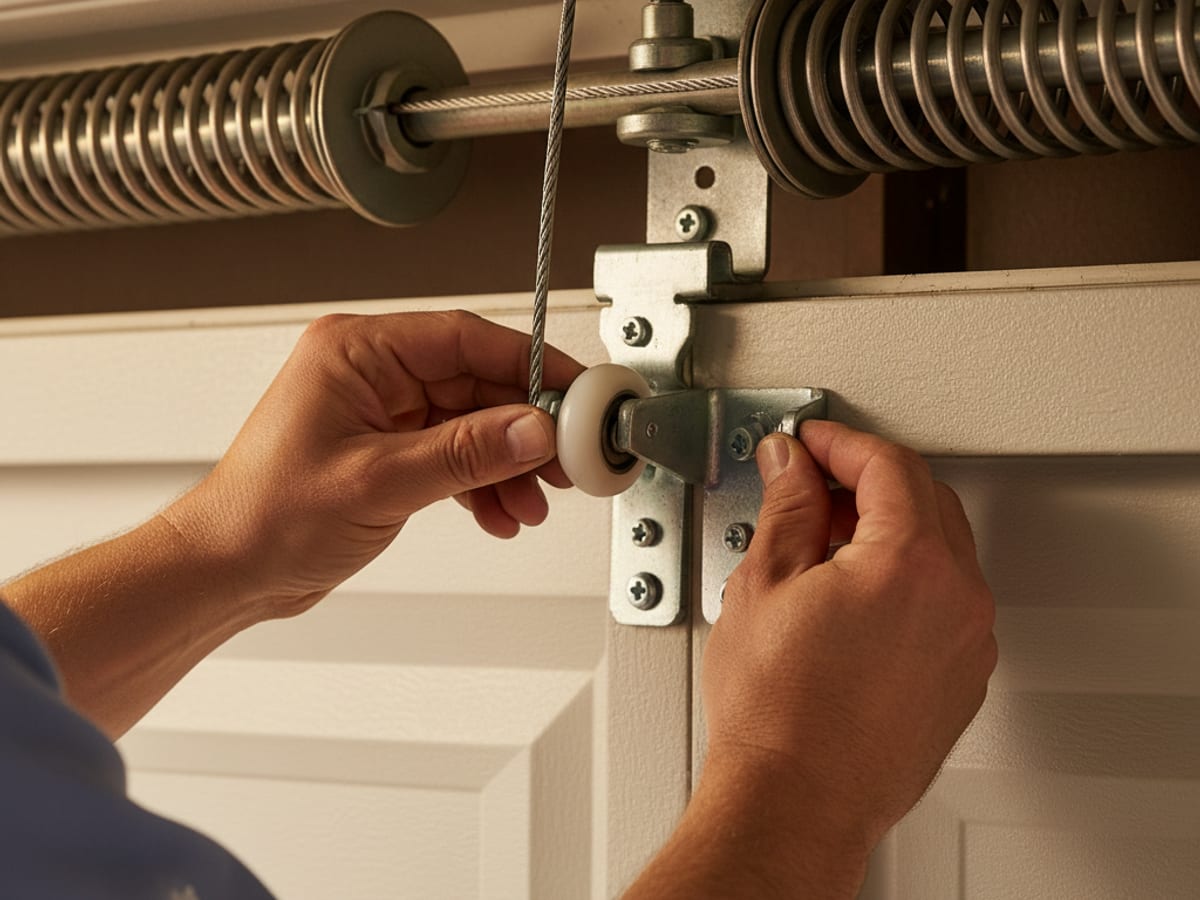
What's included in this service?
- Both cables replaced as a pair (never one-at-a-time)
- Cable drum re-seating and tension matching
- Upgrade from steel rollers to 13-ball-bearing nylon rollers
- Hinge inspection and tightening at every panel
- Track inspection for bends caused by a failed cable
- Bottom bracket replacement when corroded or deformed
- Balance test after the work, door should hold mid-travel unassisted
When do you need this service?
- Visible fraying, kinking, or rust on the lift cables
- Door hangs crooked after a spring break, cables took the shock
- Grinding or metal-on-metal sound during travel (flat-spotted rollers)
- Rollers wobble visibly in the track
- Black rubber or metal dust on the track or garage floor
- Cable jumped off the drum and is bunched at the bottom
- You want a dramatically quieter door
What do homeowners ask about Cables & Rollers?
Why replace both cables if only one is frayed?
Cables are a matched pair under identical load across identical cycles. If one frayed or snapped, the other is at the same fatigue point even if it still looks okay. Replacing them together costs about 20% more than one, and you're not back here in three months when the second cable gives up.
Nylon rollers versus steel, worth the upgrade?
Almost always yes. A good 13-ball-bearing nylon roller runs quiet for 20,000+ cycles. A builder-grade steel roller is loud from day one and flat-spots in 5 to 8 years. Upgrading all 10 rollers costs about $60 more than steel and removes the single biggest source of garage door noise. Easy call.
Can cables be dangerous to replace?
Less dangerous than springs, but still not a DIY sweet spot. Cables are under tension when the door is down and the springs are wound, releasing the wrong one can whip. The techs we send vice the spring shaft, neutralize tension properly, and swap cables without incident. A home handyman without winding bars and C-clamps is a recipe for a bad day.
How do I know if rollers need replacing?
Spin one by hand when the door is down and the tension is off, it should spin freely for a second or two. If it grinds, sticks, or rattles, it's done. Also look for flat spots on the wheel itself and black rubber dust inside the track. Any of those, time to swap.
Where do we offer Cables & Rollers in San Diego County?
We provide cables & rollers in every city and community in San Diego County. Pick your city for local climate notes and service specifics.
See cables & rollers in all 67 cities
Need cables & rollers in San Diego County?
Call for a free quote. Most work scheduled within the week.