
TL;DR
- The 7 most common causes of garage door noise: worn metal rollers, dry hinges, loose hardware, unbalanced springs, failing opener gears, loose opener rail, and bad rollers in the opener trolley.
- Metal rollers are the single biggest noise source. Swapping to nylon rollers is the highest-ROI noise fix, $140–$280 and 60%+ quieter operation.
- Lubricate hinges, rollers, and springs with white lithium grease every 6 months. Never WD-40. It’s a solvent, not a lubricant, and strips the grease already in place.
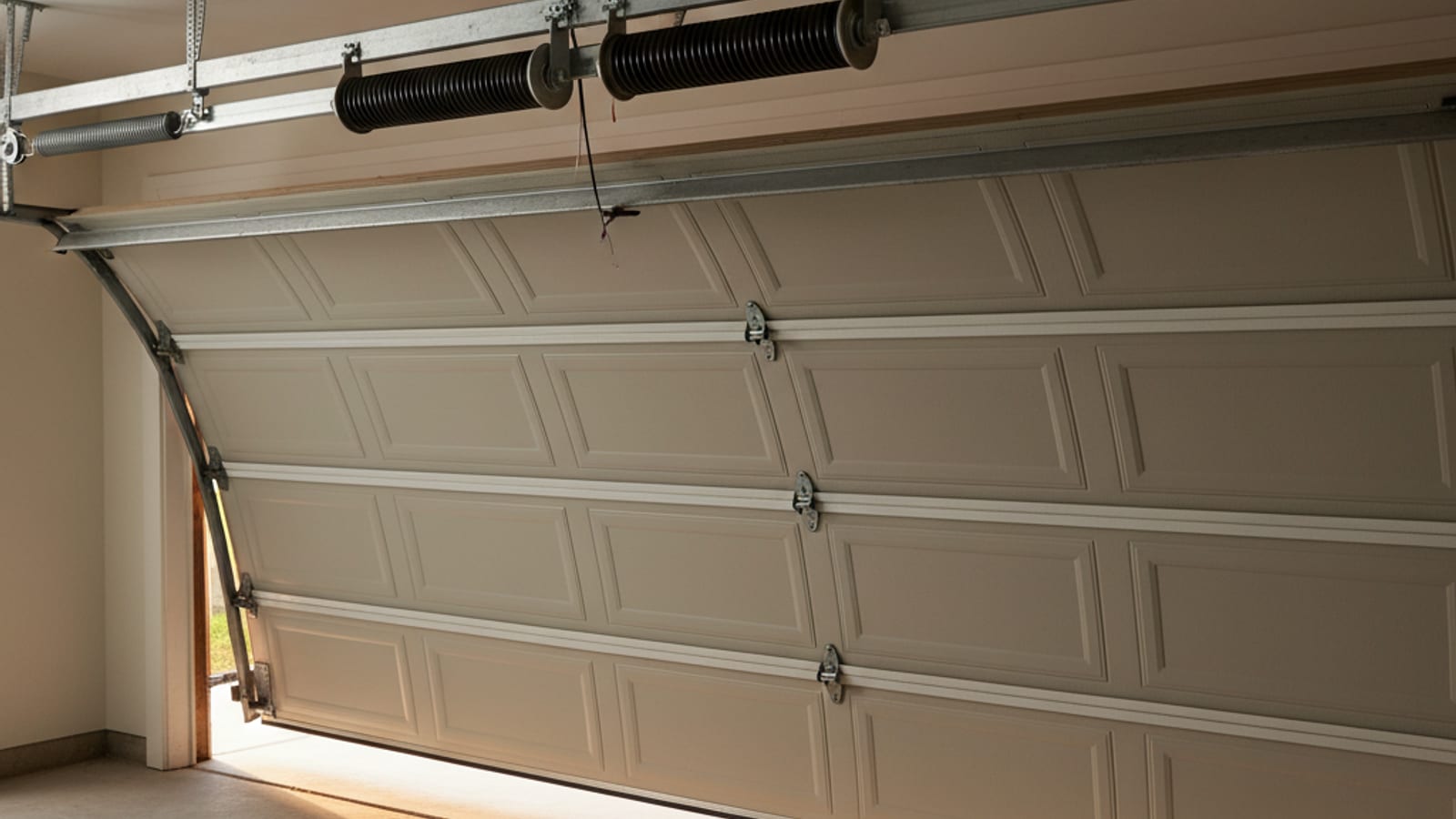
- If the noise started suddenly and is paired with the door feeling heavier, the springs are the cause. Don’t keep running the door, and call for spring diagnosis.
The door opens and the whole house knows. Your upstairs bedroom rattles every morning when someone leaves for school. The dog runs. Your neighbor’s lights flick on at 6 a.m. It used to be quieter. What changed?
Usually one of seven things. Let’s work through them from cheapest-to-fix to most-involved, with DIY steps where homeowners can actually do the work.
1. Worn metal rollers
This is the number-one cause of a loud garage door. Most homes built decades ago came with cheap 10-ball steel rollers. They’re loud when new, and they get louder as the bearings wear.
Signs it’s the rollers:
- Rumbling or rolling-thunder noise during operation (not a clunk or a bang, but a constant grind)
- Visible play in the rollers when you wiggle them by hand
- Rust dust on the tracks or on the concrete below them
- A specific panel makes more noise than the others (the roller on that panel is failing)
The fix: swap all 10 rollers to nylon rollers with sealed bearings. Cost for the swap: $140–$280 installed. Drops noise 55–70% immediately. Nylon rollers last 12–15 years versus 6–8 for cheap metal. This is the single highest-ROI noise fix you can do.
Any cable and roller replacement call gives you the option to upgrade. Most techs will push you toward nylon. It’s more expensive at the counter, and it’s the right answer.
2. Dry hinges
A garage door has 6–10 hinges between panels. Every hinge has a pin that rotates inside a steel eye every time the door cycles. Without lubrication, the metal grinds on metal and squeaks, pops, or groans.
Signs: squeaking or creaking on specific panels, especially halfway through door travel when the door transitions from vertical to horizontal.
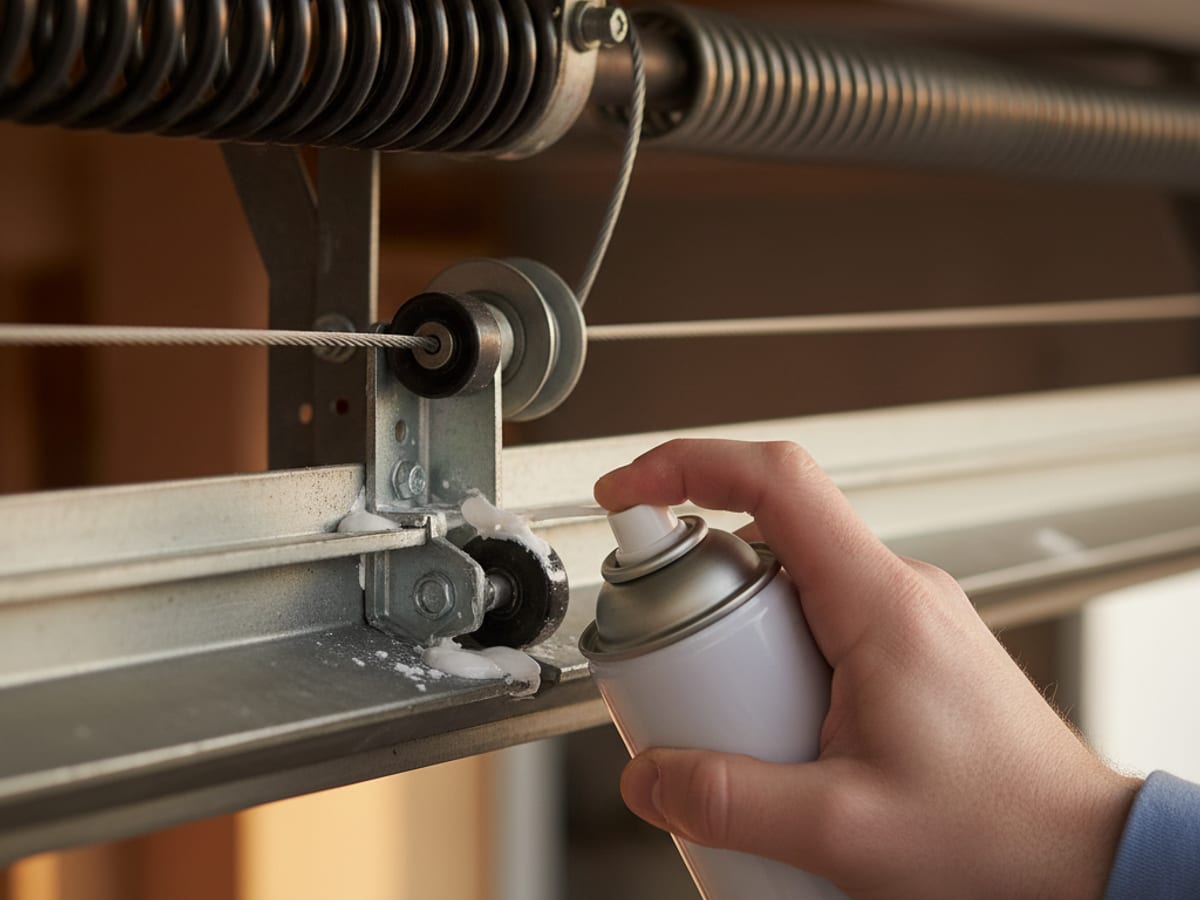
The DIY fix: white lithium grease on every hinge pin. Apply 2–3 drops at the base of each pin where it enters the hinge eye. Cycle the door 2–3 times to work the grease in. Wipe any runoff.
Do not use WD-40. WD-40 is a solvent. It displaces water (that’s what the name means, Water Displacement, 40th formula). It strips off the existing grease and leaves the metal dry. Six weeks later the door is louder than before.
The right product: white lithium grease in an aerosol can. Available at any hardware store. $8–$12. Lasts a homeowner 2–3 years.
3. Loose hardware
Every time the door cycles, every bolt and nut in the system experiences vibration. Over time, they loosen. Loose hardware rattles.
Check these:
- Track mounting bolts. The bolts that hold the vertical tracks to the wall jamb. Should be tight enough that you can’t wiggle the track by hand.
- Hinge bolts. Where each hinge connects to the panels above and below. Two bolts per hinge side.
- Opener mounting bolts. Where the opener motor housing attaches to ceiling joists, and where the rail attaches to the header above the door.
- Roller bracket bolts. Where the roller brackets attach to each panel.
Tools needed: a 7/16” socket or open-end wrench covers 90% of residential garage door hardware. Tighten anything loose. Don’t over-tighten: snug, not stripped.
This is a 15-minute DIY job every 2 years. Catches most rattling noises before they become anything bigger.
4. Unbalanced springs
A door with weakening or incorrectly-wound springs is heavier than it should be. The opener has to work harder, the chain or belt jerks under load, and the door moves in fits and starts.
Signs:
- Door feels much heavier when you disconnect the opener and lift by hand
- Opener strains, whines, or hesitates during operation
- Door doesn’t stay at mid-height when disconnected, but slides down fast or jumps up
- New noise that appeared suddenly (not gradually)
Test: pull the red emergency release cord. Lift the door to waist height by hand and let go. A balanced door holds position. A door that drops fast needs spring adjustment or replacement.
Don’t try to re-wind springs yourself. See our broken spring playbook and our spring replacement cost guide for the full detail. This is a service-call job every time.
5. Failing opener gears or sprocket
The drive gear inside the opener is the most-stressed moving part of the whole system. Plastic main gears on chain-drive openers typically fail between year 7 and year 12.
Signs:
- Opener motor runs but the chain or belt doesn’t move (or moves jerkily)
- Grinding, clacking, or crunching noise from the motor housing
- Chain is visibly slack or the belt is loose on the rail
- Trolley on the rail moves erratically
Repair: gear replacement runs $180–$320 for chain-drive openers. Belt-drive openers almost never need gear work. If the belt fails, it’s a $140–$220 belt swap. Past year 12, consider replacement instead, and see the opener lifespan guide.
6. Loose or bent opener rail
The horizontal rail extending from the opener motor to the header above the door takes vibration on every cycle. Older installations used a two-piece bolted rail that can work loose.
Signs: slapping, banging, or metal-on-metal noise from the rail (not from the motor housing). Visible play in the rail when you wiggle it by hand.
Fix: re-tighten all rail bolts. If the rail is visibly bent from a kid hitting it with a basketball or the door catching on it, the rail needs replacement. A single-piece rail on a modern opener replaces a worn two-piece unit.
7. Opener trolley rollers
Inside the opener rail, the trolley (the small carrier that pulls the door) rides on its own set of small rollers or glides. On old openers, these wear down and make a distinct rattling noise as the trolley moves along the rail.
Signs: noise that tracks the trolley’s position along the rail (loudest at one specific point in the travel).
Fix: trolley replacement on older openers is usually $80–$140 in parts. On openers over 12 years old, it’s a sign the whole unit is at end-of-life.
The full quiet-door maintenance routine
Do this once every 6 months and your door will stay near-silent for its full life:
- Lubricate hinges with white lithium grease (2 drops per pin)
- Lubricate rollers at the stem where the stem enters the roller bracket (nylon rollers only, since metal rollers should be replaced, not lubed)
- Lubricate torsion springs with a light coat of white lithium grease across the full length of both springs
- Tighten all visible hardware with a 7/16” wrench
- Clean the track with a rag and mild degreaser to remove dirt, rust dust, and old grease buildup
- Visual check cables for fraying, brackets for cracks, panels for dents
Full walkthrough in our maintenance checklist.
What you should never lubricate
A few things should stay dry:
- Steel tracks. Don’t lube the track itself. Nylon rollers glide better on a clean dry track. Grease on the track collects dust and turns into grinding paste.
- Rubber belt on belt-drive openers. The belt is designed to grip the pulleys dry. Lubricant causes slippage.
- Photo-eye sensor lenses. Dust them off with a dry cloth. No liquids.
When to call instead of DIY
Some noises signal danger, not just annoyance:
- Sudden loud bang during operation. Could be a spring about to fail. Stop using the door until checked.
- Pop or snap followed by the door getting very heavy. Spring broken. Do not run the opener.
- Grinding from the opener motor with smoke or burnt smell. Motor winding failure. Unplug opener and call.
- Rhythmic loud clunk with each cycle. Broken weld on a hinge or bracket. Call before a panel fails.
Frequently asked questions
Why is my garage door suddenly louder than usual?
Sudden noise increase is usually a broken part: a spring, a hinge, or a failed opener gear. Gradual increase over months is wear: rollers, dry hinges, or loose hardware. Check for gradually-worsening causes first, but if it happened overnight, stop using the door until inspected.
Can I quiet my garage door myself?
Yes,. Lubrication, hardware tightening, and roller upgrades are all homeowner-accessible. Spring adjustment and opener gear replacement are tech calls. Most noise complaints are solved by 30 minutes of lubrication and a $150 roller swap.
What’s the quietest type of garage door opener?
Belt-drive with a DC motor is the quietest common opener type, about 55 dB at 3 feet versus 75+ dB for a chain-drive. Direct-drive (Sommer) openers are similar. See the opener lifespan guide for replacement options.
How often should I lubricate my garage door?
Every 6 months. March and October are the common timing, and the San Diego seasonal maintenance checklist is set up around spring and fall lubrication.
If the noise is paired with the opener straining, that’s a strong signal to read the opener lifespan guide. If a spring broke, check the broken spring playbook immediately. And for keeping noises from coming back, the maintenance checklist is your twice-a-year routine.
Too loud to live with? Call Lift Pro SD at (858) 925-5546. A roller upgrade plus full lubrication is a one-hour job under $300 and almost always solves it. Same-day across San Diego County including Oceanside, Vista, and Escondido.