Replace the bottom weather seal
The rubber U-seal at the base stops drafts, water, rodents, and dust. Worn seals are obvious, swap in 20 minutes.
What you'll learn
- How to measure your door, standard widths are 8, 9, 10, 16, and 18 feet
- T-style vs. U-style retainer, knowing which one you have matters for the new seal
- How to slide the old seal out without damaging the aluminum retainer
- Why a little dish soap on the rails makes the new seal slide right in
Step by step
- Measure the door width and buy a bottom seal that matches, get 6" extra.
- Raise the door about halfway. Look under the bottom panel to find the retainer track.
- Grab one end of the old seal and pull it straight out of the retainer track. It should slide out.
- Wipe the retainer channel clean of dirt and old rubber residue.
- Spray a little soapy water along the retainer rails.
- Feed one end of the new seal in, keep it straight, and pull it through across the full width.
- Trim the excess with a utility knife so it sits flush with each edge.
Safety note
If the retainer itself is bent or corroded (common on coastal homes), the seal will never sit right. Retainer replacement is $120–$240 installed, worth it for a proper seal.
Rather have a pro handle it?
Same-day electrical service across San Diego County. A real electrician picks up.
More guides
Keep learning.
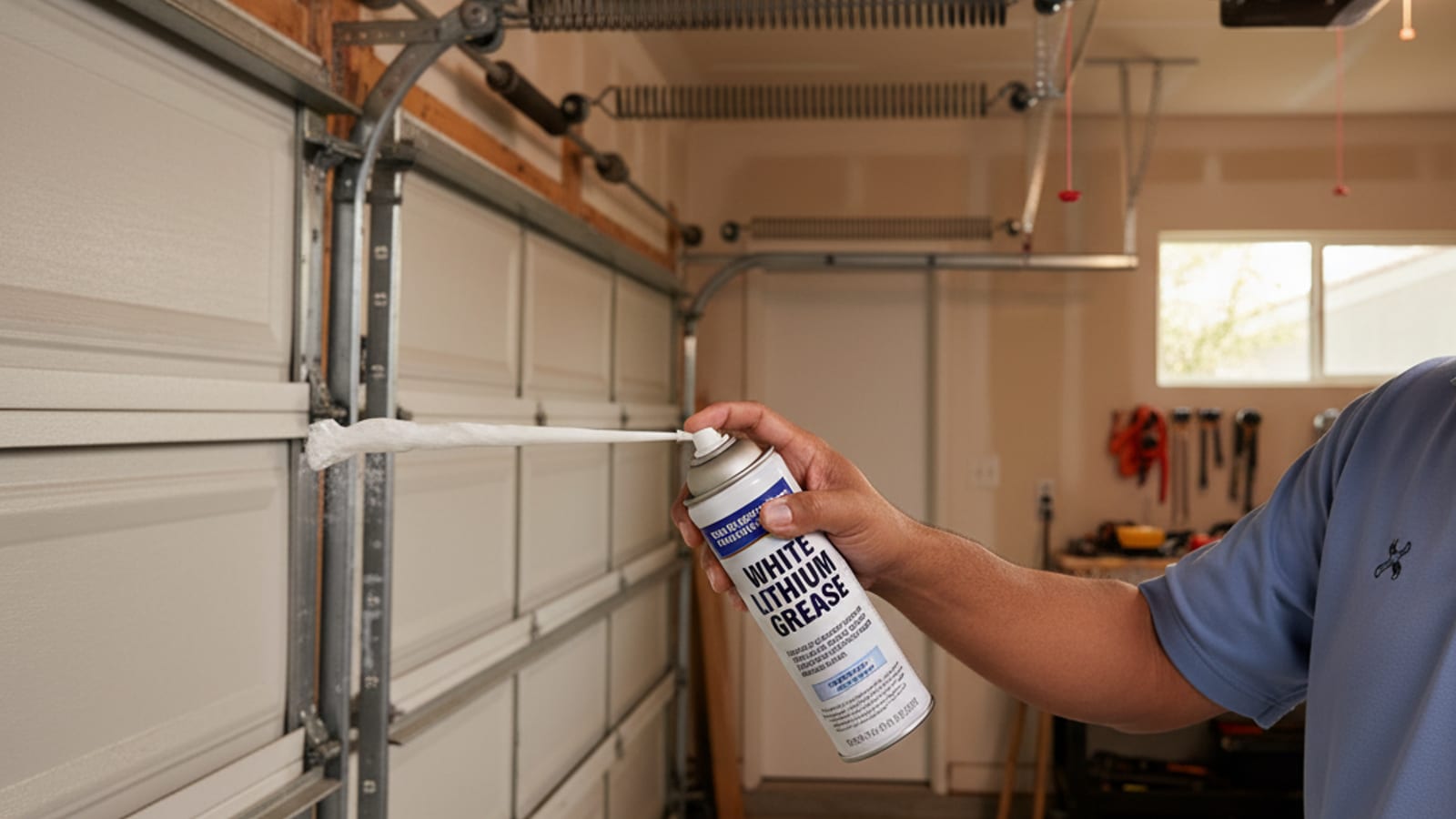
Maintenance · 4 min watch
Lubricate your garage door (the right way)
Five minutes twice a year. Cuts noise, extends spring life, and keeps rollers from seizing.
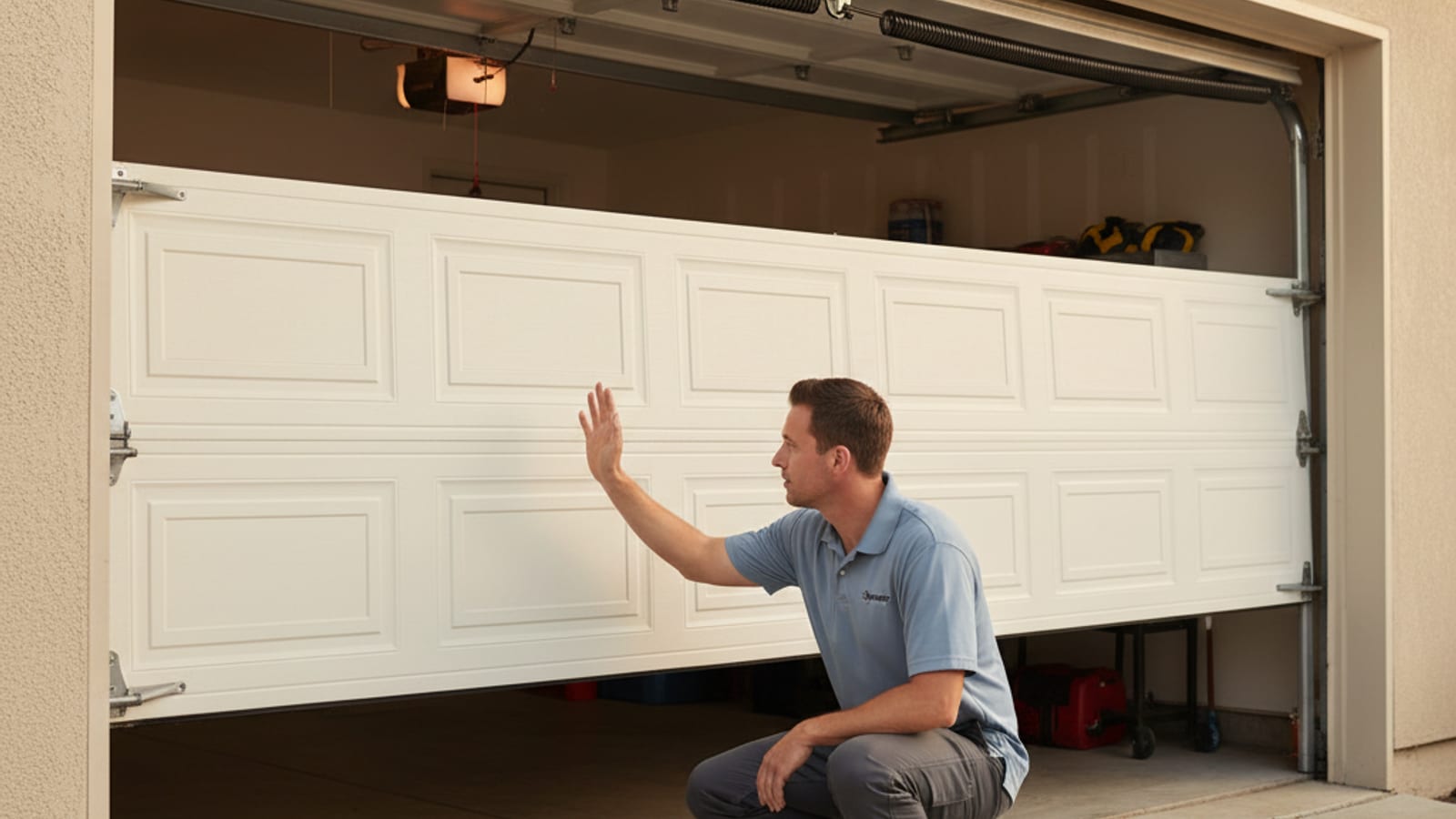
Safety · 3 min watch
Test your garage door safety sensors (monthly)
The photo-eye sensors six inches off the ground are the only thing stopping the door from closing on a kid, pet, or car.
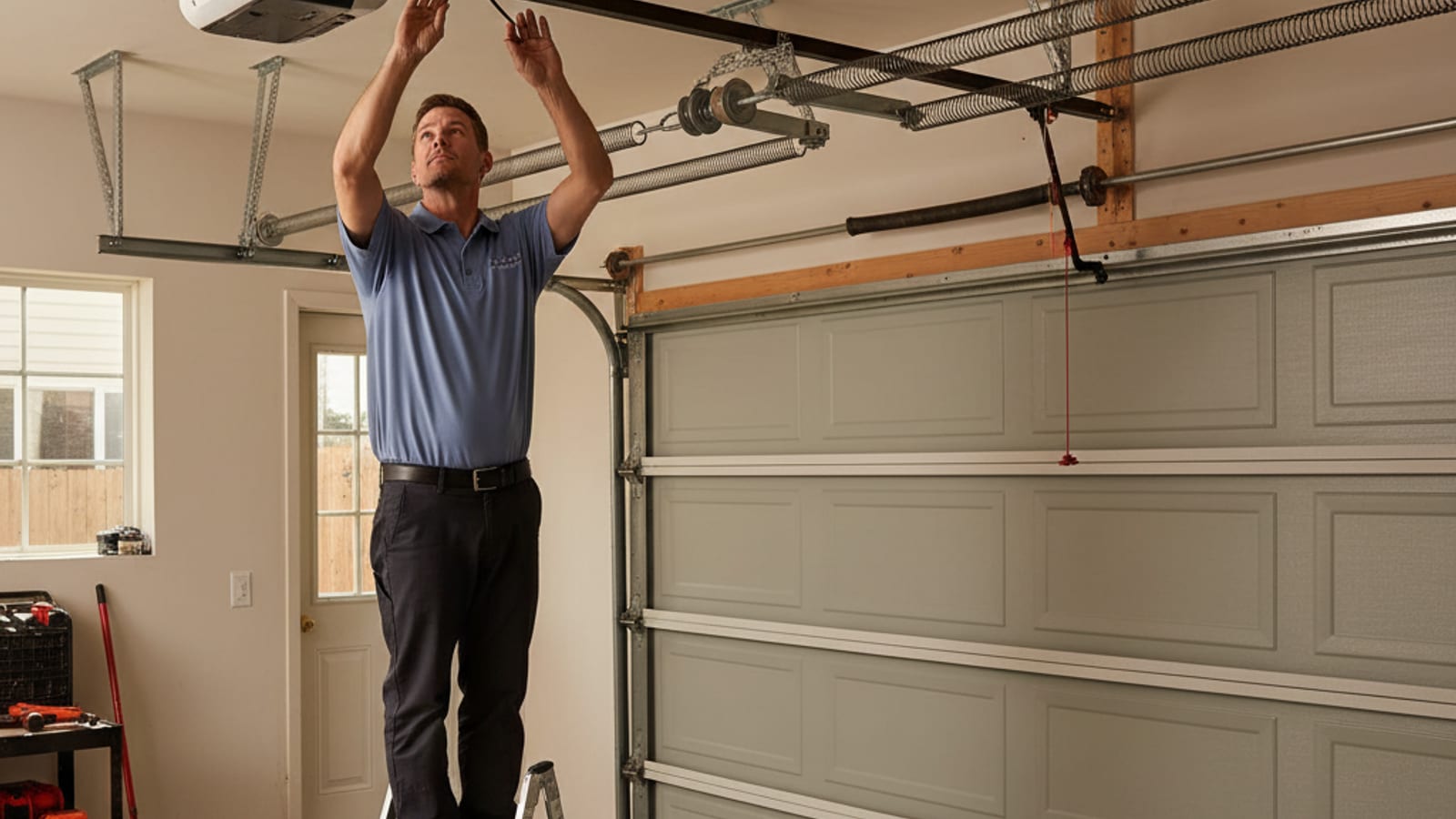
Troubleshooting · 3 min watch
Reset your garage door opener after an outage
After an SDG&E blip or new battery, the opener often needs a quick reset before the remote works again.