Lubricate your garage door (the right way)
Five minutes twice a year. Cuts noise, extends spring life, and keeps rollers from seizing.
What you'll learn
- Why WD-40 is the wrong product, it degreases instead of lubricates
- The three products that actually work: white lithium grease, silicone spray, garage-door-specific lubricant
- The seven parts that need lubrication, hinges, rollers, springs, bearing plates, lock bar, chain/screw, arm
- What NEVER to lubricate, the tracks themselves (rollers ride on dry steel)
Step by step
- Close the door fully and unplug the opener for safety.
- Wipe down each hinge, roller, and spring with a clean rag, remove old grime first.
- Spray white lithium grease on each hinge pivot point and the ends of each spring.
- Lift-and-spray each roller so the shaft and bearing get coated (not the wheel itself).
- Apply a thin line of grease to the torsion bar ends where it passes through the bearing plates.
- Open and close the door a few times to work the lubricant in.
Safety note
If the door still sounds like a freight train after lubrication, the rollers are probably worn past their useful life. Nylon rollers last about 7 years and only cost $180–$340 installed to replace.
Rather have a pro handle it?
Same-day electrical service across San Diego County. A real electrician picks up.
More guides
Keep learning.
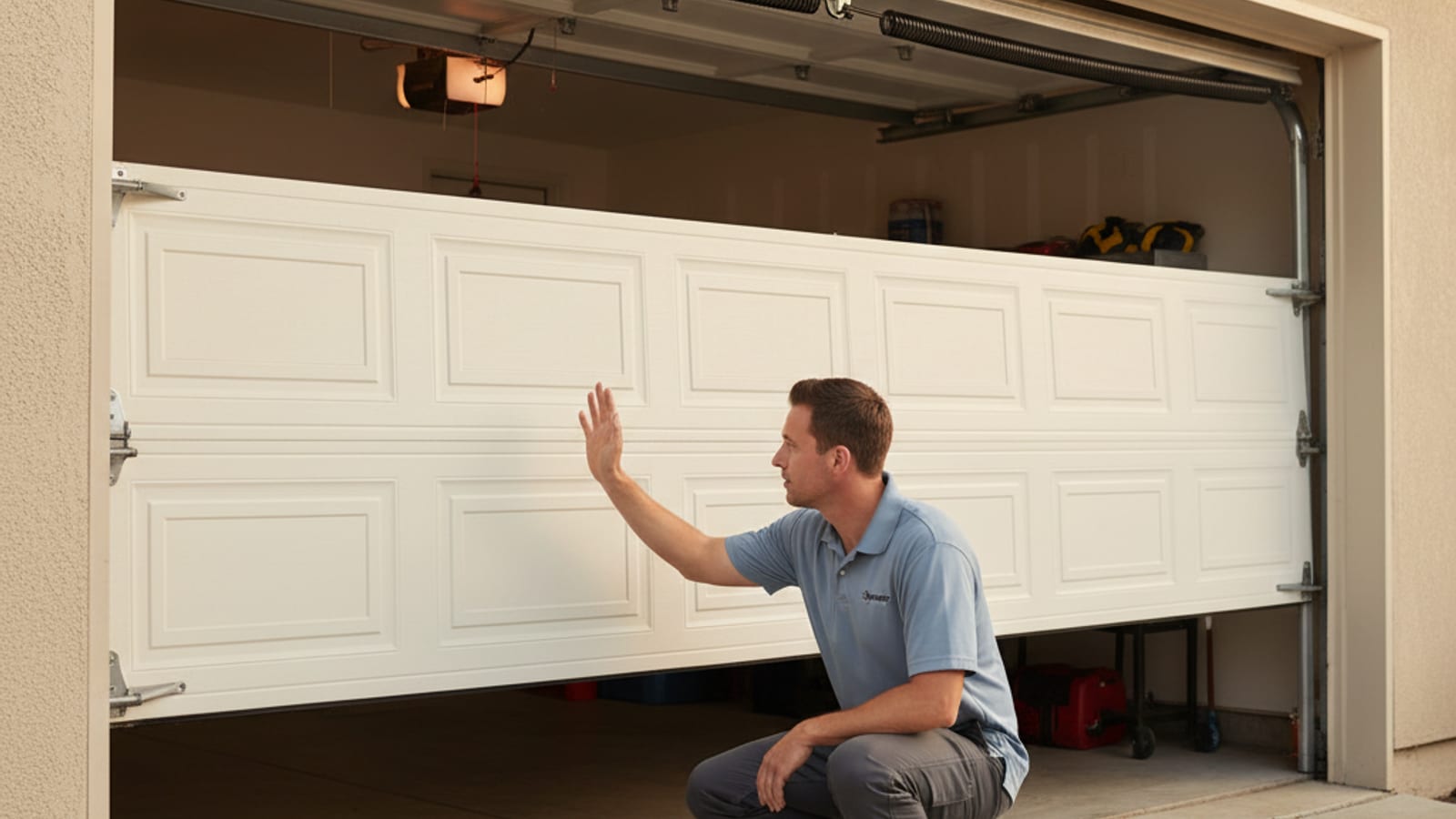
Safety · 3 min watch
Test your garage door safety sensors (monthly)
The photo-eye sensors six inches off the ground are the only thing stopping the door from closing on a kid, pet, or car.
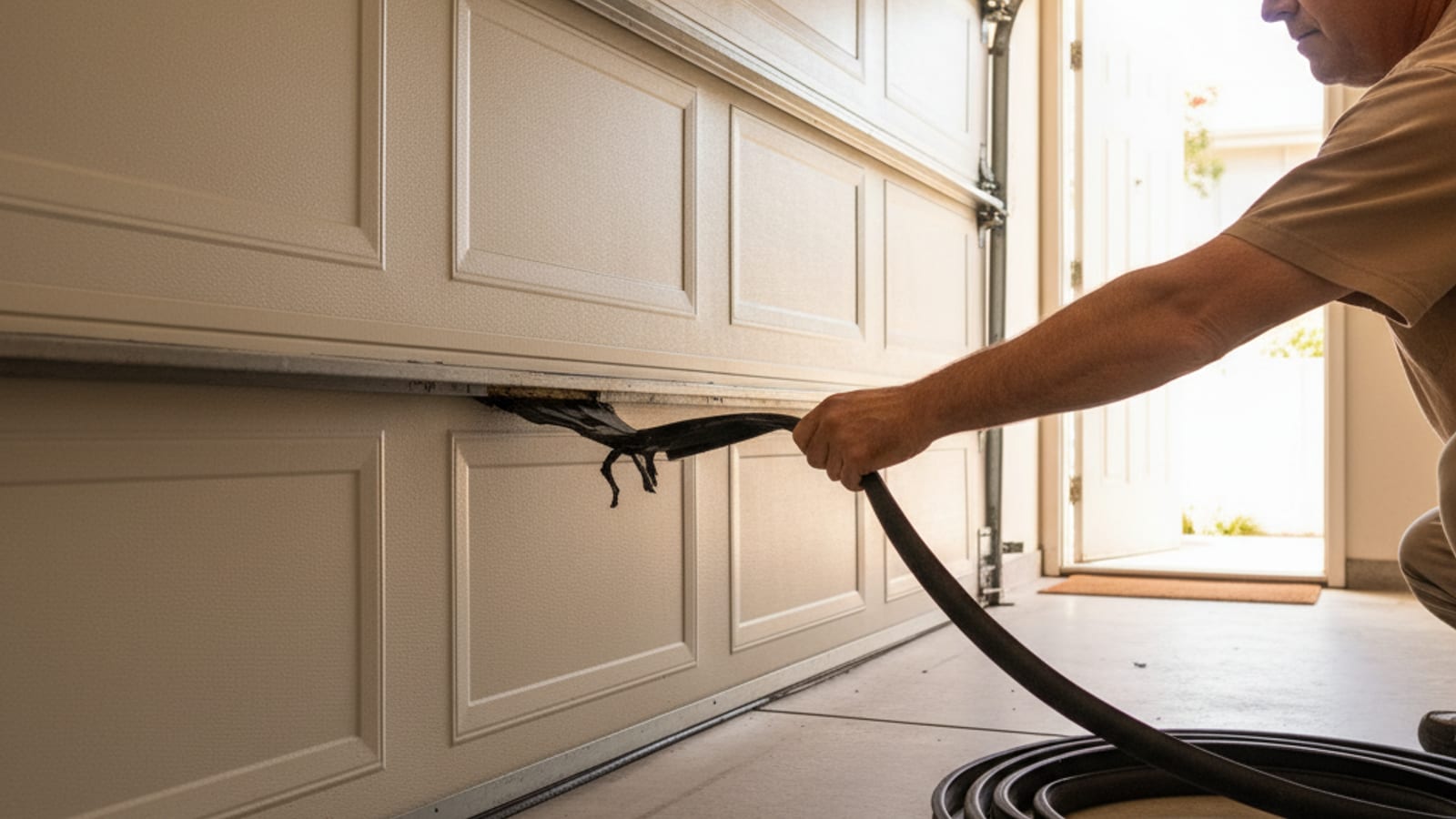
Basics · 5 min watch
Replace the bottom weather seal
The rubber U-seal at the base stops drafts, water, rodents, and dust. Worn seals are obvious, swap in 20 minutes.
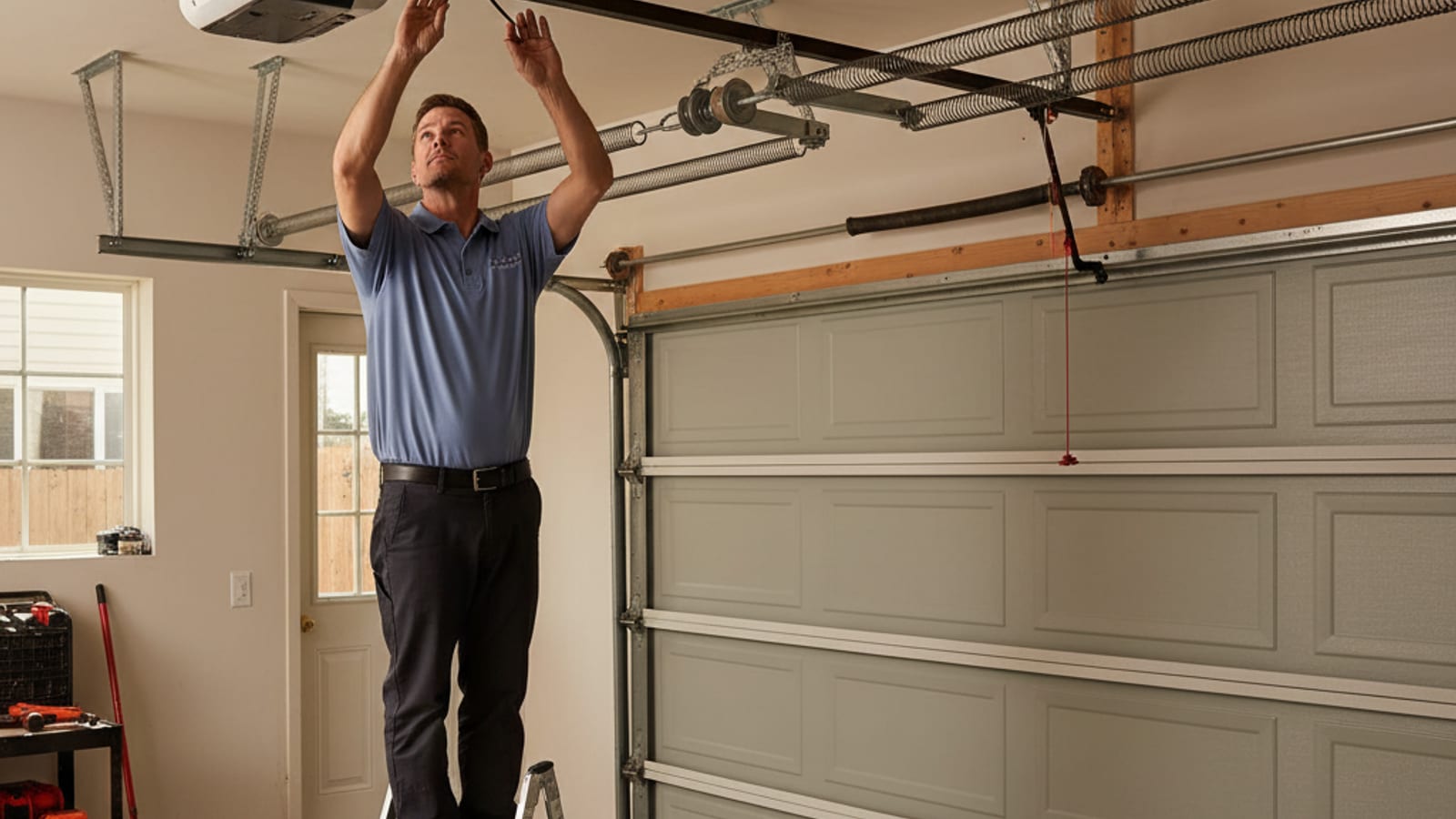
Troubleshooting · 3 min watch
Reset your garage door opener after an outage
After an SDG&E blip or new battery, the opener often needs a quick reset before the remote works again.