
TL;DR
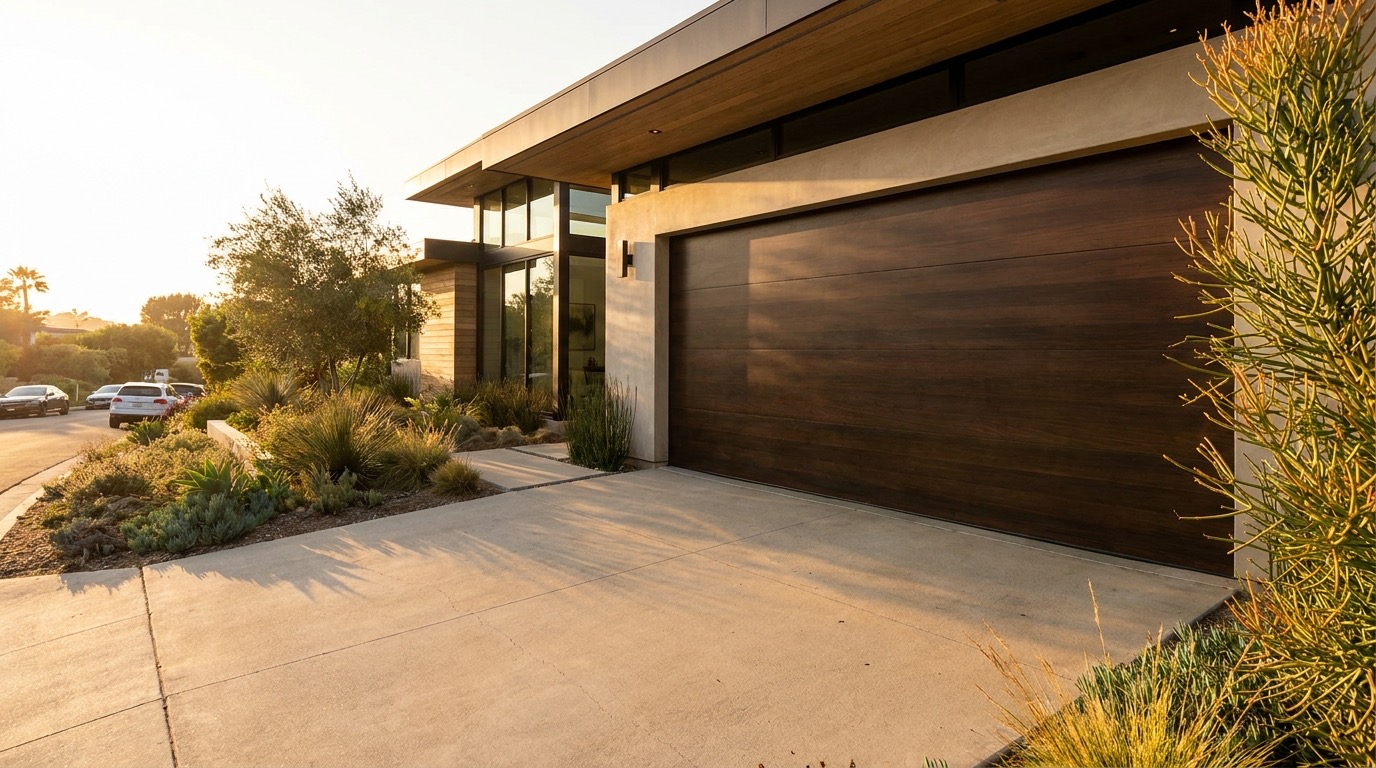
- Sectional doors are the standard for San Diego residential homes: hinged panels that travel up and overhead on tracks, familiar hardware, good insulation options, and wide style selection.
- Roll up garage doors use interlocking steel or aluminum slats that coil into a barrel above the opening. Common in commercial settings, and useful for residential garages with very tight headroom or extreme space constraints.
- Coastal SD homeowners (La Jolla, Del Mar, Coronado, Carlsbad) should prioritize corrosion-resistant materials for either type.
- For most residential purchases in San Diego, a sectional door is the right call. For commercial bays, workshops, or compact garages with almost no headroom, a roll-up is worth pricing out.
- Call (858) 925-5546 or read below for the full comparison.
You’re replacing your garage door and you’ve seen the term roll up garage door in your research. Most people picture the traditional sectional door, the kind that opens in segments and curves overhead, because that’s what 90% of San Diego homes have. But there’s a second door type that shows up in commercial settings, older garages, and certain residential builds where standard doors don’t fit. Knowing the difference helps you buy the right door for your specific situation.
What a sectional garage door is
A sectional door is made of horizontal panels, usually four to six of them, each 18–24 inches tall. The panels connect at horizontal hinges. When you open the door, the bottom panel lifts, the hinges fold, and the panels ride up along curved tracks that transition from vertical (along the wall beside the opening) to horizontal (along the ceiling above your car). The door ends up flat overhead, parallel to the ceiling.
This is the dominant residential garage door design in the United States and in San Diego specifically. The hardware is standardized. The style options are wide. Insulation is easy to engineer into the panels. Repairs are modular: a damaged panel can be replaced without touching the rest of the door.
Garage door installation on a sectional system is the most common job the pros in our network run. New construction in San Diego almost universally specs sectional doors.
What a roll-up garage door is
A roll up garage door works on a completely different principle. Instead of hinged panels on tracks, it uses a series of narrow interlocking steel or aluminum slats, typically 2–3 inches wide each, that are connected end-to-end in a continuous curtain. When the door opens, those slats coil up around a barrel mounted above the opening. When it closes, they uncoil back down.
The barrel sits above the opening and the door requires no horizontal tracks along the ceiling. No tracks means no ceiling space consumed beyond the barrel housing itself, and no rails for your car antenna to hit.
Commercial roll-up doors are the standard in warehouse bays, self-storage units, loading docks, and industrial buildings. They’re built for frequent cycling, durability under heavy use, and security.
How each type handles San Diego’s environment
Coastal salt air (La Jolla, Del Mar, Coronado, Carlsbad, Imperial Beach)
Salt air corrodes steel fast. For sectional doors, galvanized hardware and powder-coated panels hold up better than standard residential hardware. For roll-up doors, aluminum slats resist corrosion better than steel in coastal settings. Commercial steel roll-ups within a half mile of the water need corrosion-inhibiting lubricants and regular inspection. Either way, if you’re within a mile of the ocean, material selection matters more than it does inland.
East County heat and canyon dust (El Cajon, Lakeside, Alpine, Ramona)
Summer temperatures regularly hit 95–105 degrees and canyon dust is constant. Sectional doors with quality weatherstripping seal against dust better than most roll-up configurations. A well-insulated sectional door also moderates interior temperature more effectively for garages used as workshops or living space.
HOA-managed neighborhoods (Rancho Bernardo, Poway, Mira Mesa, San Marcos)
Most HOA communities in San Diego have architectural guidelines for garage door appearance. Roll-up doors have very limited style options and almost never meet residential architectural standards. If your home is in an HOA, a roll-up door would likely require architectural review committee approval and be unlikely to pass.
Style and curb appeal
Sectional doors win on curb appeal. Panel styles include traditional raised panel, flush contemporary, carriage-house overlay, full-view aluminum with glass inserts, and mid-century flat panel. They come in a wide range of colors and some wood-look steel doors blend well with the craftsman and spanish-style homes common throughout SD County.
Roll-up doors come in a corrugated or flat-slat profile. Commercial versions look like what they are: a warehouse door. Decorative residential roll-up styles exist but the selection is narrow and the cost runs significantly higher than a standard commercial unit. For most San Diego homes, the style gap alone points toward sectional.
Insulation comparison
Sectional doors can be filled with polyurethane or polystyrene foam between the steel skins, reaching R-8 through R-18. That matters for attached garages, which covers most San Diego tract homes built after 1980. Roll-up doors are typically single-layer steel slats with no insulation. The sectional door wins on R-value without much competition. See new garage door cost in San Diego 2026 for insulated door pricing by tier.
Space requirements
This is where roll-up doors have a real advantage. A sectional door needs about 14 inches of headroom above the opening for the curved track section, plus the full ceiling depth for horizontal tracks. In a standard 8-foot garage that’s fine. In a low-ceiling space with a steep roofline or a tight attic above, that headroom requirement can make a sectional door impossible or require a low-headroom kit.
A roll-up door needs only the barrel housing, typically 10–12 inches. Extreme headroom restrictions are solved. Side room is also narrower: sectional doors need 3.75 inches per side for vertical track; roll-up doors need only the slat guide channels.
Durability and maintenance
Both types can last 20–30 years with proper maintenance. The failure modes differ.
Sectional doors have moving parts at every hinge and roller, but every component is individually replaceable. A broken spring doesn’t mean a new door. A bent panel can be swapped without touching the rest of the system. See garage door panel replacement for what individual repairs cost.
Roll-up doors have fewer moving parts. The slats ride in channels and the barrel holds the tension mechanism. When a slat is damaged by impact, replacement is possible but difficult to match on older doors. The barrel spring system is analogous to a torsion spring and requires professional service when it fails.
Cost comparison
For residential applications in San Diego County:
Sectional door installed cost:
- Basic steel, uninsulated: $900–$1,400
- Insulated steel (R-8 to R-12): $1,400–$2,200
- Premium insulated, decorative: $2,500–$5,000+
- Full-view aluminum/glass: $3,000–$6,000+
Roll-up door installed cost:
- Commercial-grade steel (standard): $1,200–$2,500
- Heavy-duty or fire-rated commercial: $2,500–$6,000+
- Decorative residential roll-up: $2,000–$4,000
For a standard residential opening, a sectional door typically costs less installed than a commercial roll-up of equivalent size. The roll-up makes economic sense when the space constraint is real or the commercial application demands it.
For full pricing detail, see the garage door repair cost guide for San Diego.
Which one should you choose?
For a typical San Diego home, the answer is almost always sectional. Here’s the short version:
Choose a sectional door if:
- Your garage has standard or near-standard headroom (8 feet or more)
- You want insulation, curb appeal, or HOA compliance
- You’re in a residential neighborhood where the door is visible from the street
- You want the widest selection of styles, finishes, and price points
Choose a roll-up door if:
- You have extreme headroom constraints (under 6 inches of clearance above the opening)
- The application is commercial: a workshop bay, storage unit, or business location
- You need very high cycle frequency (commercial roll-ups are rated for 100,000+ cycles vs 10,000–25,000 for residential sectional)
- Security and forced-entry resistance are the top priority over appearance
If you’re unsure which fits your opening, a measurement takes about 10 minutes. The headroom, side room, and ceiling depth all factor into the recommendation.
Frequently asked questions
Are roll-up garage doors more secure than sectional?
Commercial-grade roll-up doors resist pry attacks well. Heavy steel slats and guide channels are harder to force than a standard residential sectional panel. For most residential applications, a reinforced sectional door with a quality lock bar provides adequate security. Roll-up doors earn their security reputation in commercial settings with frequent break-in risk.
Can I put a standard opener on a roll-up door?
No. Standard rail-drive openers don’t work on roll-up doors. Roll-up doors use a direct-drive barrel motor that winds and unwinds the coil, not a trolley pulling a door arm along a ceiling rail. The motors are different systems entirely.
What’s the best garage door for a coastal San Diego home?
For Coronado, Del Mar, or Carlsbad, look for a sectional door with galvanized hardware, marine-grade fasteners, and a powder-coat finish. Aluminum doors resist corrosion better than steel in coastal conditions and cost more. Ask specifically about salt-air rated hardware when you get quotes.
How do I know if my garage has enough headroom for a sectional door?
Measure from the top of the door opening to the ceiling directly above it. Standard curved-track sectional install needs 14 inches. A low-headroom track kit works with 10–11 inches. Below 10 inches, a roll-up may be your only option. A tech can confirm in person.
If you want to compare door types side by side, see new garage door cost in San Diego 2026 for a full pricing breakdown. And if you’ve already decided and want to understand what goes into the install, the garage door maintenance checklist covers what to expect during the first year of ownership.
Ready to get the right door on your garage? Call Lift Pro SD at (858) 925-5546. The pros in our network assess your opening, confirm clearances, and install across all of San Diego County, including Chula Vista, Oceanside, and El Cajon.